On This Page
Anyone who has worked in a theatre with staplers knows the reload colours. They are a quick visual code, but behind the colour is a real clinical decision: matching the staple to the tissue.
Why Staple Height Matters
When a staple forms, it makes a “B” shape that holds the tissue. The height of the formed staple has to suit the tissue’s thickness after compression.
- A staple that is too short can over-compress the tissue and affect blood supply to the staple line.
- A staple that is too tall may not hold thin tissue securely, which can lead to bleeding or leak.
Tissue thickness varies by organ, by the patient and by the condition of the tissue. Oedema or inflammation can make tissue thicker than it looks. This is why reloads are made in several heights.
What the Colours Do
Colours identify the reload’s staple size and intended tissue range at a glance. Each manufacturer has its own code, so a colour does not carry across brands. Always check the packaging and the instructions for use.
The Trizone and Tenzr Families
Within FourZone’s laparoscopic range there are two stapling families under one zone, each with its own cartridge code.
- Trizone and Trizone GC: reloads run White, Purple and Black.
- Tenzr: reloads run White, Blue, Gold and Green.
A selector page follows each family, so the two codes are never confused. See the Laparoscopic Staplers page.
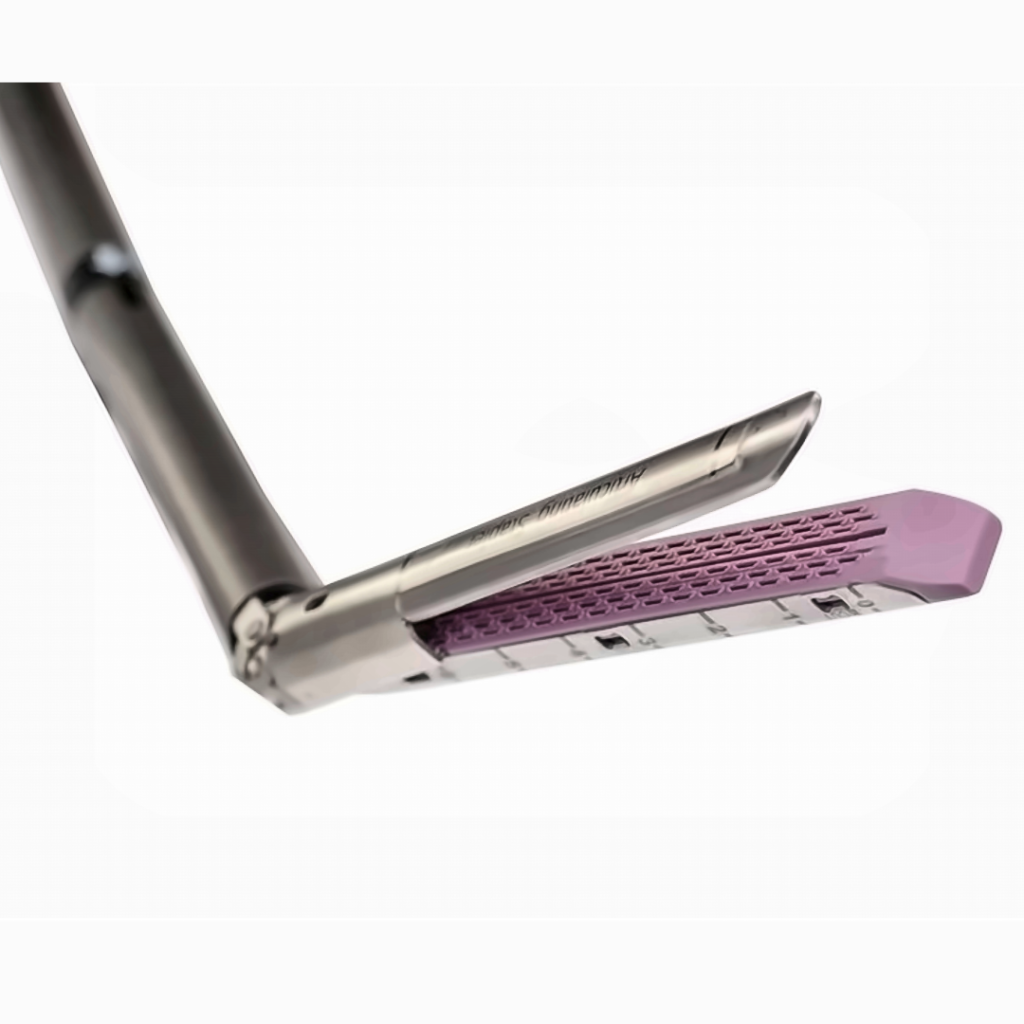
Graded Staple Patterns
Trizone lays six rows of staples in three different heights, tallest at the outside. Tissue is compressed gradually across the jaw rather than uniformly, which aims to keep the blood supply at the staple line without giving up hold on the thick edge. An isometric height retainer holds the anvil geometry constant while the staples form, and the blade is replaced with every reload so the first firing and the fifth are cutting with the same edge.
Tenzr uses calibrated reload heights for uniform staple formation across the whole line, with a high pre-clamping force. Its cutter head is quench-hardened alloy, precision-hardened for lasting sharpness.
How Surgeons Choose a Reload
- Assess the tissue. Consider thickness, quality and any oedema.
- Pre-clamp. Allow the tissue to settle in the jaws before firing, as the instructions advise.
- Check the gauge or indicator on the instrument if one is provided.
- Select the reload whose range suits the compressed tissue.
- Fire steadily and inspect the staple line afterwards.
Tips for Theatre and Stores Teams
- Store reloads by family and colour, with clear labels.
- Keep a one-page selector chart near the stapler trolley.
- Train new staff on the codes for each brand in use.
- Avoid mixing reload families on the same handle unless the instructions allow it.
What Can Go Wrong When Codes Are Misread
Confusion between reload families is a recognised risk in busy theatres. Common scenarios include:
- Assuming a colour from one brand means the same in another.
- Selecting a reload from memory instead of checking the pack.
- Stocking reloads of different families together without labels.
- Mixing reloads and handles that are not designed to work together.
The consequences range from an inconvenient delay to a staple line that does not suit the tissue. Simple habits prevent most of these problems.
Habits That Help
Read the Pack, Every Time
Colour is a quick guide, but the pack gives the full detail. Build the habit of reading it aloud when handing over a reload.
Keep a Visible Chart
A laminated selector chart for each family, kept on the trolley, helps everyone, especially new staff and visiting surgeons.
Standardise Where You Can
Fewer reload families make errors less likely. Use specialist families only where they are needed.
Why Reload Design Matters
The reload is where the staple, the blade and the anvil meet the tissue. Details such as blade quality, staple geometry and the precision of the cartridge influence consistency from the first firing to the last. When evaluating a stapler, test several firings in a row and look at the staple lines, not only the first one.
Related Reading
For an overview of stapling, read what is a surgical stapler. To compare devices, see our selection checklist. If you need a printed selector chart for your theatre, ask our team.
Continue Reading
- What Is a Surgical Stapler and How Does It Work?
- Open vs Laparoscopic Staplers: Differences and When Each Is Used
- How to Choose a Surgical Stapler: A Checklist for Hospitals
Frequently Asked Questions
Why are stapler reloads colour coded?
Colours identify the staple height and size, so the team can match a reload to tissue thickness quickly and avoid selecting the wrong one.
Do colours mean the same thing across all brands?
No. Each manufacturer uses its own code. Within the FourZone range, Trizone runs White, Purple and Black, while Tenzr runs White, Blue, Gold and Green.
What happens if the staple height is too short for the tissue?
Tissue may be over-compressed and its blood supply affected. Too tall a staple for thin tissue may not hold securely. Match the reload to the tissue as described in the instructions for use.